
By Dr Rachel Johnson and Dr Tami Kalsi-Rogers
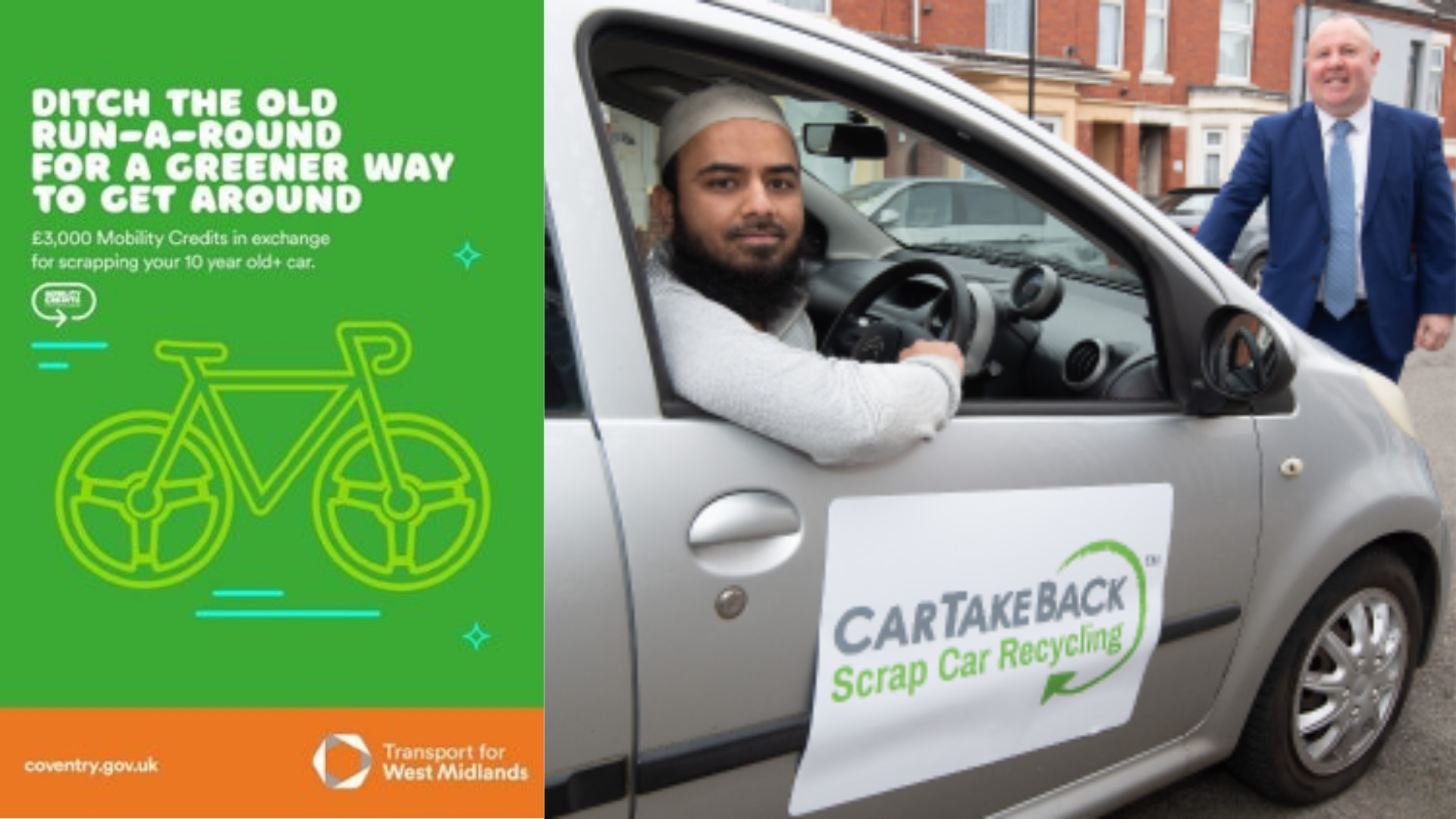
At Transport for West Midlands, we’ve run a number of innovative projects trialling how we might persuade people out of their cars and into other forms of transport. One of these projects was the Coventry Mobility Credits scheme. In 2021, this scheme offered residents of Coventry the opportunity to exchange an old, polluting vehicle for £3,000 worth of Mobility Credits. These credits could be used on public transport (including bus and train), alternative transport services such as taxis / Uber, car hire, and bike hire or purchase.
Learning from Coventry Mobility Credits
98 Coventry residents joined the scheme. Over the course of two years, their travel choices were monitored to understand how they managed without a car, and what they did with the credits they had been given. In 2023, an analysis of the scheme found that:
- Taxi or private hire vehicles were the most commonly used alternatives to cars, followed by buses and trains.
- A significant number of participants reported an increase in walking journeys after participating in the Mobility Credits Scheme.
- By the end of the scheme, 30 participants had requested cycling vouchers to buy a bike. This was far more popular than the cycle hire scheme.
- Thirteen participants had purchased a new car since starting the scheme, 2 of which were fully electric.
In October 2024, this evaluation was followed up with a series of interviews with participants, to understand the medium-term impact of the scheme. All 98 participants in the scheme were approached to take part in the study, and 15 participants accepted.
Did the changes stick?
A key finding from this second evaluation was that the changes people have made that have been the easiest to sustain are the changes to habitual journeys. For example, during the scheme people found alternative ways to travel to work, and these seem to be the habits that have stuck. None of the participants who stopped using their car for work indicated that they had switched back to using a car again for work. Journeys for childcare, leisure, errands and sports typically did not change before, during or after the scheme.
For the people who took part in the medium-term study, there was a feeling that they needed a degree of certainty around their journeys. When they are able to repeat the same journey, and can therefore understand and accommodate any disruption, they are more likely to use an alternative to a private car. Where there is some uncertainty, about how to do multiple drop offs or about timings and locations, the private car is the preferred option.
For a future where reliance on private cars is reduced, increasing certainty and familiarity around availability of alternatives, how to use them, how to manage travel and unforeseen circumstances, may go a long way to encouraging people out of their private vehicles.
INFUZE Partnership
Transport for West Midlands are delighted to be a partner in the INFUZE project. We are already learning so much from this ambitious project about re-imagining our cities with reduced car ownership and increased sustainable modes of travel. This is something we are passionate about in the West Midlands – and an area where we face a lot of the same challenges as West Yorkshire, in trying to change people’s perceptions about how they could move around.