
By Richard Dilks, CoMoUK
CoMoUK is the national charity for the social, economic and environmental benefits of shared transport and so we are keen participants in and followers of INFUZE. I thought it might be helpful to sketch out how we see the shared transport scene and how this works in communities across the country.
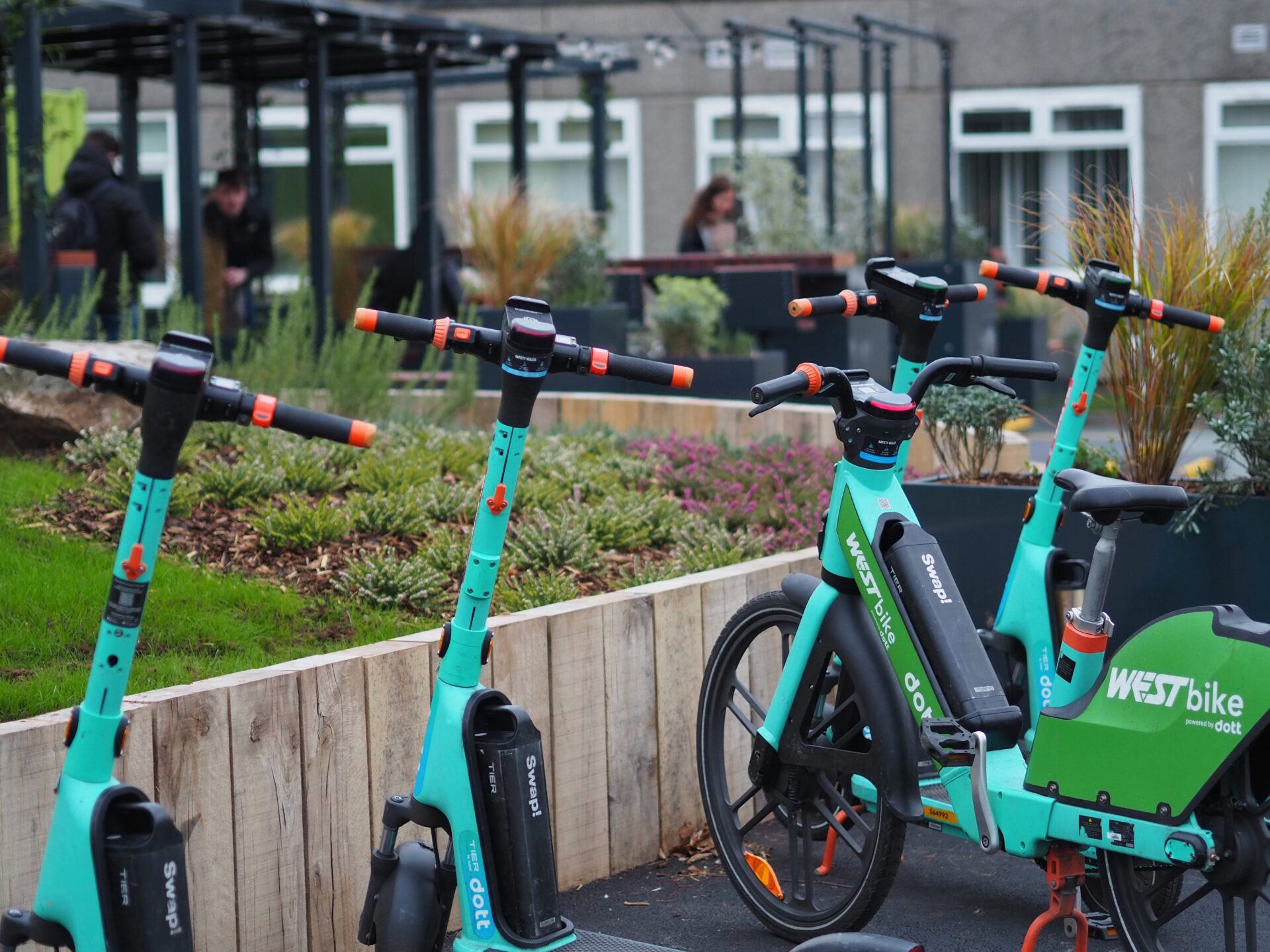
Shared transport means cars, bikes or e-bikes, e-scooters or shared rides that you can use without having to own or lease them. People access them for a relatively short period of time and thus swerve the costs and hassle of ownership, storage and maintenance. It is a sector that has grown strongly in recent years, although we have had a major wobble in car sharing with the departure of Zipcar from the market. And overall we are a long way back (particularly on shared car provision levels and overall policy support) from the rest of Western Europe.
Top down
That policy support I mentioned matters a lot. More, in my experience, than the people in charge of it often believe or understand. This blog is timely in the sense that the UK has recently taken some tentative but important steps forward here, via the Better Connected strategy. This offers best-yet narrative support to shared transport and that is very welcome. Ironically it also offers some tantalising missed connections which we will be working hard to join up: for example, between rail and shared transport. If we can’t get those two coming together more and better then we have surely failed. Regrettably, it also offers some absences where it should have presence – liftsharing and mobility hubs, for examples.
Ground up
What does all this Government strategy stuff mean out in the decision-making world though? Although only the shared e-scooter trials are run directly from Whitehall, we do have the most centralised comparable bureaucracy in the world. So a lot is run indirectly from Whitehall. In theory more devolution is coming via the English Devolution and Community Empowerment Act. We shall see how that works out in practice.
Yet one of the (many) joys of my job is seeing the headway ambitious teams and individuals are making at local levels. These often do not get the airtime, recognition or support that they deserve but they are delivering for shared transport. What this means for their communities is reduced costs, congestion, and emissions and improved physical health, mental health and air quality. The difference that a few choice individuals in a sufficiently supportive structure can make on the ground in their area is truly remarkable. This is something to celebrate if you’re lucky enough to live in one of these areas or something to worry about if you don’t.
At a more micro level there are those in community organisations of all kinds (formal and informal, charities, CICs, social enterprises, etc) who have also been moving mountains. They shouldn’t have to move mountains for something that delivers so many direct and indirect benefits – there’s the top down failure in action again – but they’ve done it anyway.
Hitting the wall
What do all these positive flows have in common? They see what someone rightly described to me the other week as “the wall of indifference” that faces so much positive traction around sustainable transport in the UK – and they do it anyway. This is what we need to encapsulate, treasure and expand if we are to have more of the country look like INFUZE. Meantime, folks like me also need to keep trying to take down that wall.